A few hours after we arrived in Warsaw, we were confronted by an unexpected situation. After having left our belongings in the flat, we decided to go to the old town to get our first impressions of the place, to take our mark and to exchange money. We changed a big portion of the cash we had, which is something we should have thought about if we had known what was about to happen next. We walked along the streets before taking the tram. We thoroughly enjoyed this afternoon and bought waffles in a very busy street. Whilst waiting for the tram, we ended up in the middle of a big crowd which was crammed together in order to get on the tram. As we didn’t have anything to eat for the evening, we went to a restaurant which made take away food.
Lea: At the time of paying, we realized that my wallet had completely disappeared: no trace, neither in our pockets nor in our bags… The waiter, laughing, told us that I certainly had brought happiness to a Pole. Panic overcame the enthusiasm we had to be here. Fortunately, our relatives helped us cope with this situation and we are writing this article in order to share our experience and help to future victims of this kind of situation.
Santi : “I can’t find my wallet”. This would not be the first time someone tells me they have lost something, which normally appears eventually in the depths of a bag or burrowed somewhere in a pocket. However, after having looked for the wallet for a few minutes, and after having taken everything out of the bag, we soon understood that this situation would not be like any of these times. When you are faced with such a situation, two thoughts run in your mind, either: “the object fell somewhere and retracing your steps will help find it”, or worse: “it was stolen by a pickpocket”. To avoid thinking of the possibility of the second, I chose to believe in the first solution and returned to the tram stop, trying to search the floor. It failed. I quickly understood that this situation, that so many travelers are afraid of, happened to us, during the very first day of our very first trip together.
We learned a first lesson from this experience: you must to keep a cool head. It does no good to panic, to cry – it won’t make the object come back. You rather have to think of the ways to limit any future damages. You have to accept that the current situation is like it is and you need to act accordingly. The first thing to do in the event of disappearance/loss or theft of your papers is to block your credit card. Then, you need to go to the police and file a report. However, you need to be careful because the procedures are not immediate: in our case, we directly went to the police (luckily, it was only about ten minutes away on foot) but we needed to wait for the next day to get an official translator to speak to the police so that the complaint was admissible (translators are provided for every language in this kind of situation).
If you want a tip, while the facts are clear in your mind, make a list of the entire wallet’s content and any details about it and also about the time you realized it was missing: this will all be asked for by the police.
The next morning, we went to the embassy, which is the second important step to get information about the procedure to follow. We were lucky Lea was the one who had lost her wallet and not Santi because there is no El Salvadorian embassy on site.
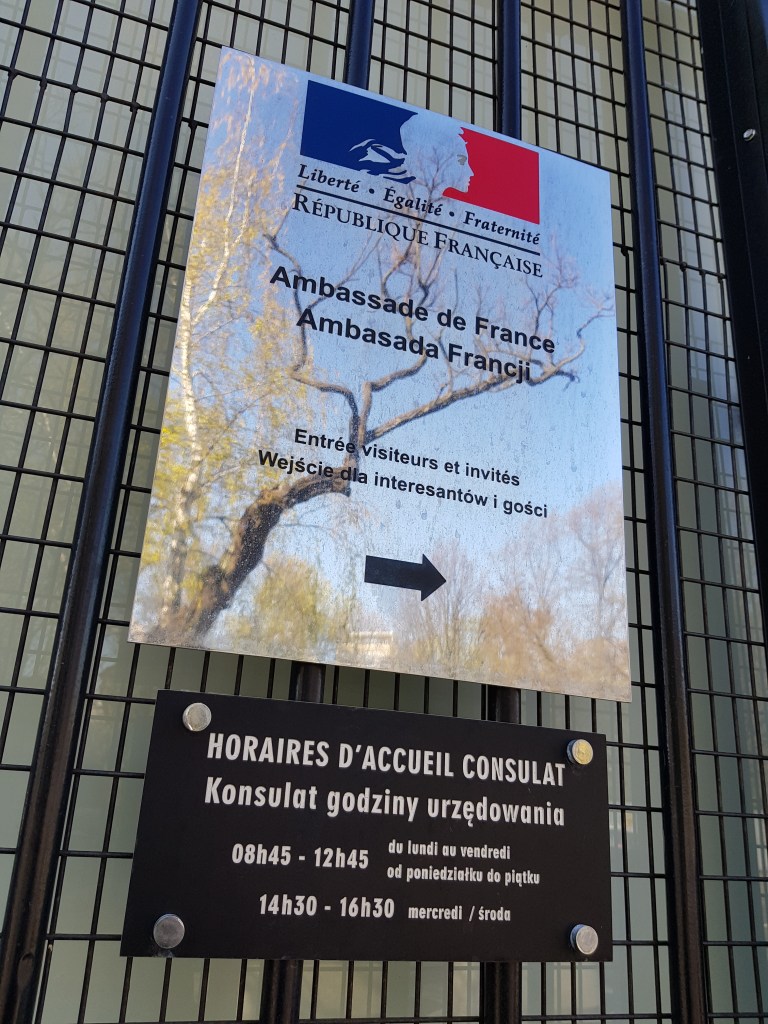
The only travel document Lea had was lost, and without it we could not return to France. We needed to get a pass or a police report about the theft signed by the embassy. Be aware this does not guarantee the return if it is not accepted by the airline prior to boarding.
- The official theft report from the police
- A scan of the ID (here is another tip: ALWAYS travel with a photocopy of your identity papers in your suitcase and make sure you also have them on your phone, as well as a person in France, who can help by sending them directly to the embassy).
- 55€ (in zlotys) (you absolutely need to pay cash with the local currency. The embassy can loan some if this is not possible).
Santi: Little anecdote: I have already been to three embassies in my life, this one was the second French Embassy that I visited. This was the first time for Lea, it was very entertaining to see her entering into the world of diplomats.
We went to see a photographer to get identification photos. The appointment at the police was at 4 p.m. At the police, a lot of people were waiting for the same thing, which made us feel a little less lonely – all the foreigners were here for a theft of papers. The day after the appointment, we had the report in our hands and went to the French Embassy of Poland again. I was equipped with the scan of my ID, with the money and with the report, and I was soon given the pass. The staff of the embassy were very friendly and welcoming, as well as the translator, which is the reason why this experience is not a bad memory for us.
The last step, once all of these procedures are done, is to talk to all the train and bus companies, hotels, and wherever else you made a reservation with your ID. When we took the train to Krakow, the inspector did not want to know anything about our situation, in spite of the police report. At Krakow Station, we needed to change our tickets to modify the name of the person who made the reservation. We are grateful for the people who were at reception in the station and who were very kind to us. It is apparently possible to change the identity on the ticket online, but we preferred to do these procedures directly at the station.
Then, we just needed to show the pass at the airport so that I could come back to France without any problems.
Another tip for you before you go: don’t hesitate to check at the local transport office… Your wallet may have been found or brought back.
Finally, this experience did not spoil our stay at all : the time we wasted did not prevent us from seeing everything we wanted to see and do.
Lea : Concerning money during the rest of the stay, we paid with Santi’s money and with some help from my parents. It is important to have someone in your home country who can help when a situation like this happens.
Translated by 2stepsabroad and Emily Tucker

 2 Steps Abroad