By reading our previous articles, you have certainly understood that, for us, visiting a country also means diving into its history, even if it can be painful and hard to assimilate. How can you go to Poland with this perspective in mind without going to the memory space of Auschwitz-Birkenau? The story that took place at this camp is known by everyone. However, it is after going there, in that place which knew so much brutality, so much barbarism, but also so many acts of courage that we come to really understand this page of the past.
We want to warn you though: the visit is very hard to withstand, some images can be shocking and disturbing even several days later. There is no need to go on site to carry out your duty of remembrance. We went there only with an historical perspective and not for a tourism purpose, very inappropriate for this kind of place.
The trip from Warsaw to Auschwitz is very long and complicated; this is why we took a train to go to Krakow and then an hour and a half bus. The bus (you can find the company’s website at the end of the article) makes two stops between the two towns and costs around 6 € round trip. Don’t forget to bring your ticket printed, essential to be allowed to take the bus.
When we arrived there, the first thing that stood out for us was the large crowd which gave the impression of an « amusement park ». We deeply deplored this fact. The amount of parents with very young children also shocked us a lot.
The admission to the camp is free. However, we recommend you to take a guided tour for the visit so you can have more information. You can book your tour online by choosing the language you want. Be careful, tours are only bookable three months in advance. The visit is divided in two parts: Auschwitz 1 and Auschwitz-Birkenau (also known as Auschwitz 2). A free shuttle connects both parts in less than ten minutes.
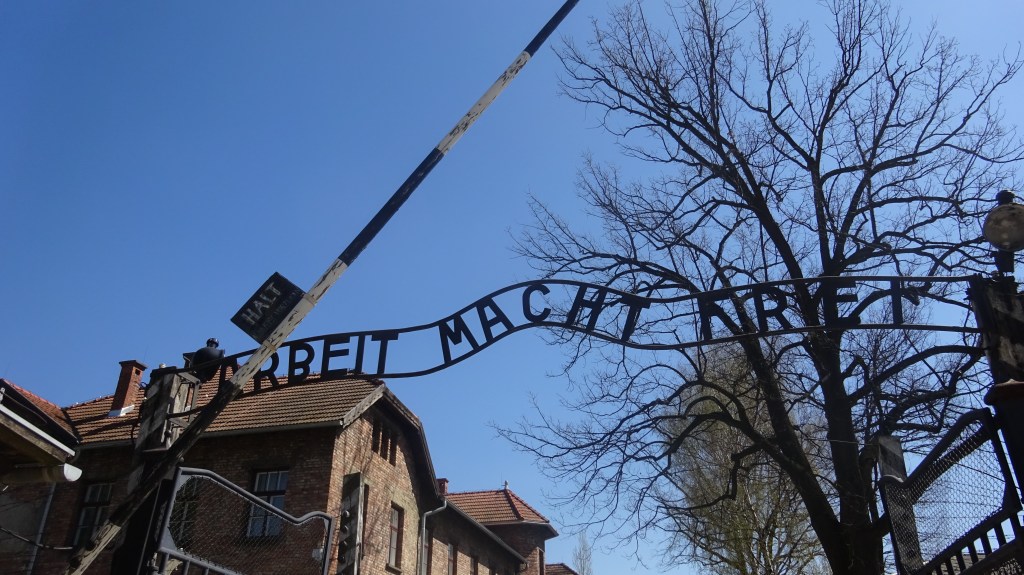
The visit starts at Auschwitz I: it is the first part of the camp set up by the Germans on a former Polish barrack. This camp first received political prisoners before receiving all of the population unwanted by the Nazis. A gate with the infamous sentence “Arbeit Macht Frei » (“Work makes you free” signs the beginning of the visit).
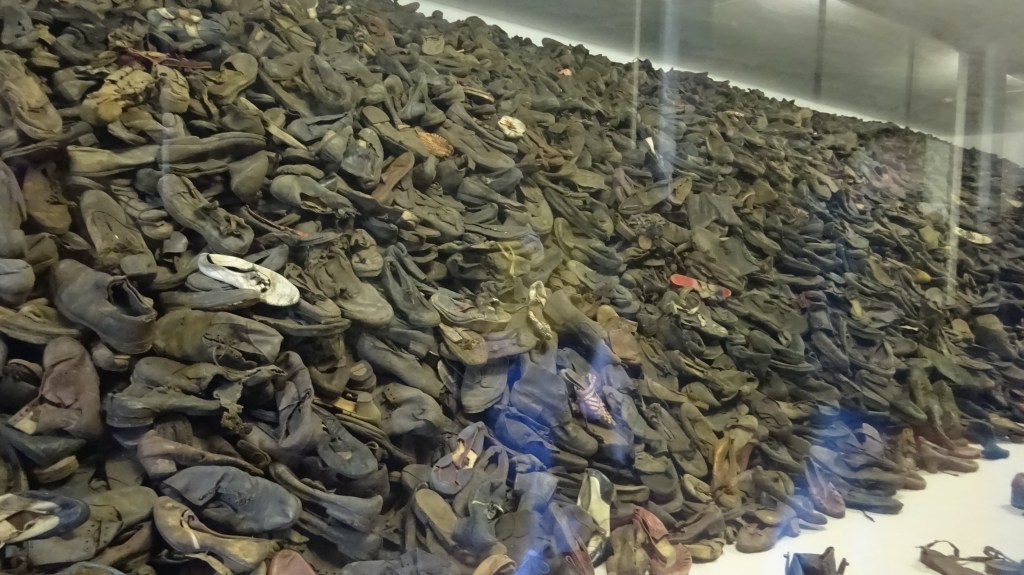
After that, the atmosphere becomes heavy and hard. Pictures are allowed in most of the places except some specific ones. Guides specify nonetheless that taking a lot of pictures is obviously not respectful because it is a memory space. During the visit you enter in several blocs with photos exhibitions taken by the prisoners themselves, models, explanation signs about the construction of the camp, about the prisoners’ origin and their fate. From the very first room, there is an urn containing anonymous prisoners’ ashes, being a collective grave. We did not take any picture to pay respect to the victims. One of the most gripping moments is the visit of the personal belongings’ exhibition. These objects were taken from them at their arrival. There are mountains of suitcases, shoes, combs, children clothes, prosthesis which are piled up behind windows.
Then comes one of the most shocking and overwhelming rooms: a pile of more than 2 tons of victims’ hair behind a huge glass window. It is unnecessary to say that pictures are strictly forbidden in this room. In another block, a corridor exhibits hundreds of prisoners’ photos which indicate the date of birth, where they come from, the job, the date of deportation and the date of death.
A part of the visit is given to the prisoners’ barracks: matrasses lying on straw, toilets, showers show the hard conditions they had to affront. It is also possible to see the interrogation rooms used by the Gestapo and the places where the prisoners were hanged or shot. One of the most difficult part of the visit is one of the basements where you can see the lockdown cells in which prisoners died of hunger of were killed by more conventional means. One of the most famous stories is the one of the priest Maximillian Kolbe. After the evasion of a prisoner in the block where he was and because of the protocols established for this kind of situation, the SS chose 10 prisoners to condemn them to died of hunger. Kolbe volunteered to go instead of a father and survived 3 weeks without eating or drinking after being killed by lethal injection. You can find a modest memorial in his cell. Pictures are forbidden in the basement.
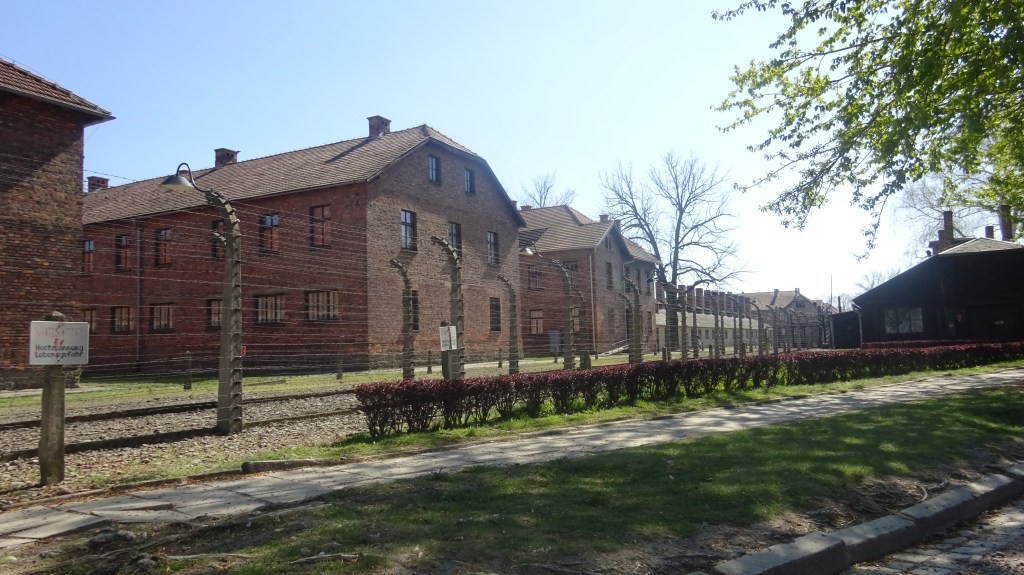
To finish, after having passed in front the hospital where the so-called doctors experimented on patients, this first part of the visit gives you access to the gas chambers and crematory ovens: nail traces on the walls are very moving and are still in our minds. Pictures are allowed but we deliberately did not wish to publish them.
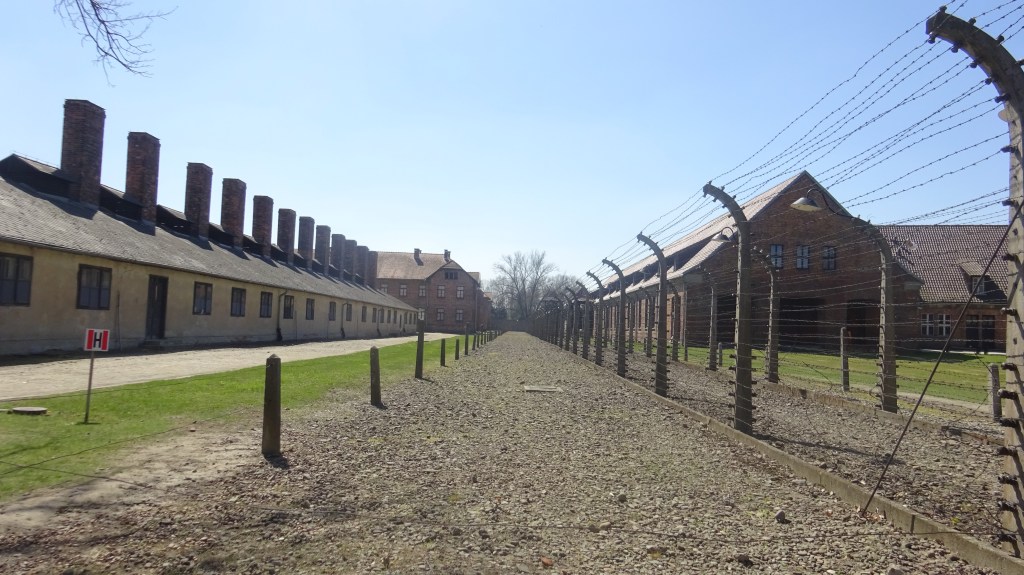
After some minutes to snap out of it and let decant the emotional shock, we took a shuttle to go to the second part of the camp: Auschwitz-Birkenau, only built for extermination. We are welcomed by the entrance and rails where the cattle car used to come in (a wagon is exhibited).
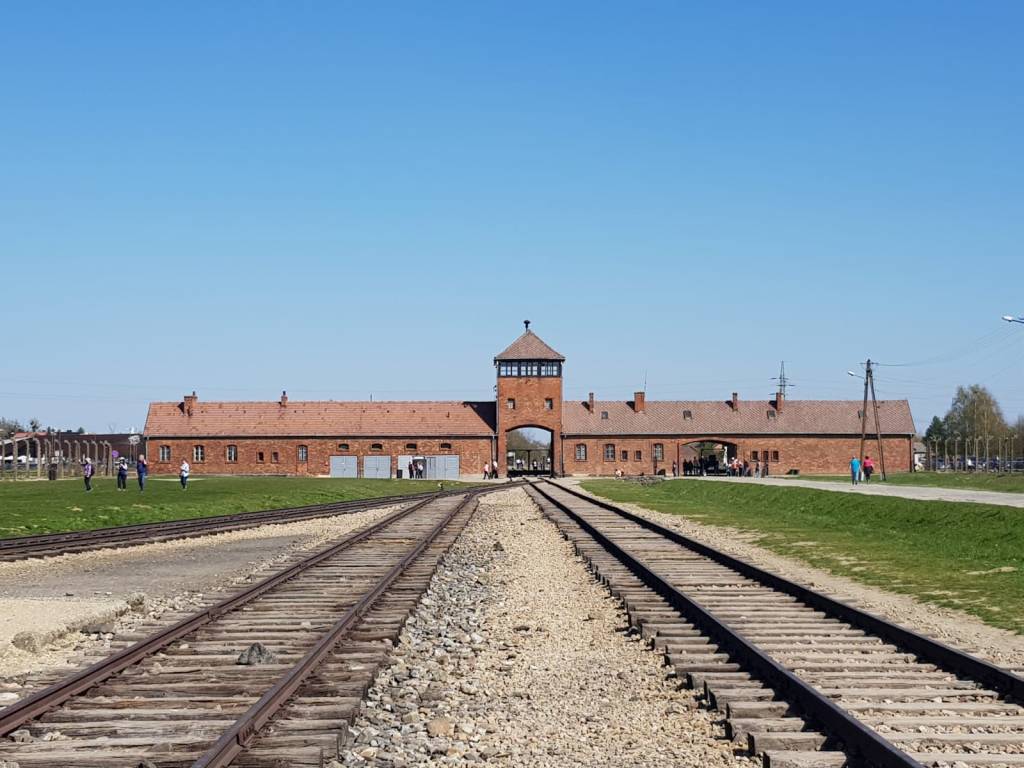
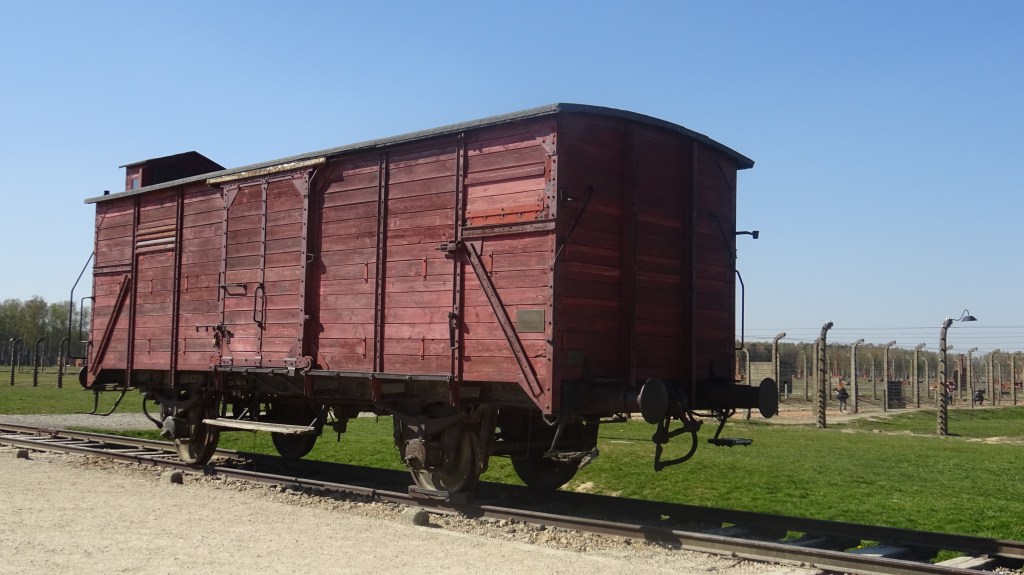
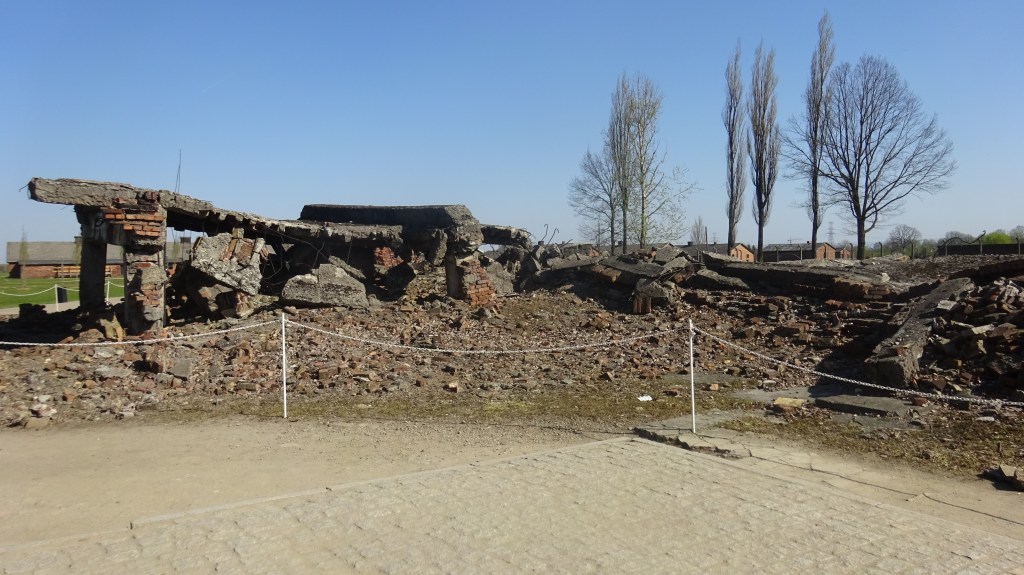
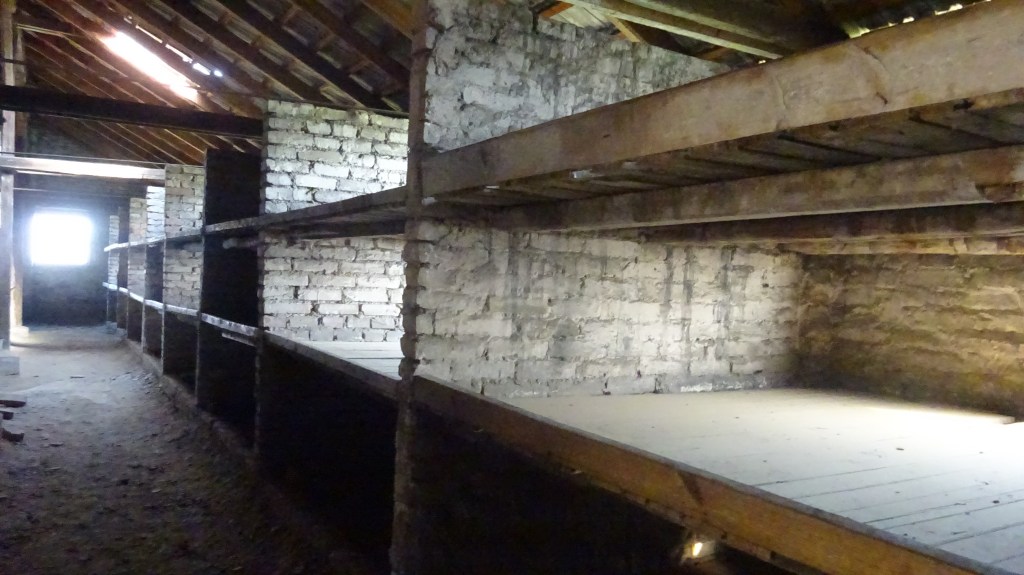
You can see barbed wires everywhere. During the visit, you walk along the railway to take the same way the prisoners used to at their arrival. At the end, you arrive in front of the memorial monument with commemoratives slabs written in the 24 languages of the 24 nationalities of the prisoners who died in Auschwitz. The rest of the visit shows the remains of crematory ovens and gas chambers which were destroyed by the Nazis to hide the evidence of the crime. You also go into the blocs where prisoners used to sleep: there are huge dormitories with bunk beds in which 3 or even 4 people slept.
At the end of the visit, in the entrance building of Auschwitz-Birkenau, a big bookshop sells books in several languages about the camp or the Shoah in general if you want to have deeper information.
We came back to Warsaw with a slight knot in the stomach after taking a bus and a train. We do absolutely not regret this day that is for us an experience to do at least once in your life. However you need to take into consideration your ability to assume and cope with such a visit. We chose to do it at the end of our stay in Poland in order to avoid that the images haunted us for the all trip. By writing this article we clearly see the traces of this visit which is still very moving.
Official websites:
The bus company we took from Krakow to Auschwitz: https://www.lajkonikbus.pl/
Auschwitz-Birkenau : http://auschwitz.org/en/
Link to buy your tickets: https://visit.auschwitz.org/

 2 Steps Abroad