When planning a trip, few words are scarier than the word « visa« . Just knowing that we need such a document to go to our dream destination can be discouraging. But even more discouraging is knowing that the country you want to go to does not ask you for a visa but that the fastest, cheapest route or, for the unlucky ones, the only one available is through a country where a visa is required, even to stop over for three hours without leaving the airport.
In this blog, we have already talked about the imperative need to check the entry requirements for the countries where one wishes to travel, even if it is only for a stopover: some countries do not ask for a visa and allow travelers to access their airports in the case of a stopover. Others grant a visa specially designed for this purpose, and others, more stringent, require a tourist visa with all the conditions it needs to set foot in their airports.
Santi: For Europeans, the doors that your passports open usually exempt you from this procedure, but for other nationalities, like mine, going through a visa procedure is often necessary. In this article, we’ll take you with us through the great adventure of obtaining a visa for a country known for its strict migration procedures: Canada.
PLEASE NOTE: the procedure described below was carried out during the period of February-March 2020, before the implementation of containment measures and travel restrictions from and to France. At the moment we write this article, the sanitary measures are still in place (article written during the containment period) and the fate of the trip for which these procedures were done remains unknown.
That being said, let’s begin:
Why transiting through Canada?
Santi: Believe me when I say that if a can avoid going through a country that requires a visa, I do it without any hesitation, having already gone through this kind of situation several times. But, to understand our choice this time, you will need a little bit of context. We would have liked to share this with you in another context, but confinement and travel restrictions thought differently: 2020 was supposed to be the year of our first trip together outside Europe, to a very important country to me. Of course, we are talking about El Salvador, my home country that I wanted to show Lea during the summer of 2020.
Transiting through Canada allowed us to save money in transportation, the flight being around half the price of a more direct flight. These are exactly the same reasons why Lea also had to transit through Canada, El Salvador not requiring a visa for French citizens. But such an odyssey would not be easy. Fortunately, it was just a transit visa, easier to obtain than a regular tourist visa.
Step n°1: Get information
Santi: Even if I was prejudiced against Canadian visas, I had a very good surprise: the government’s website is very clear, explaining everything down to the smallest detail.
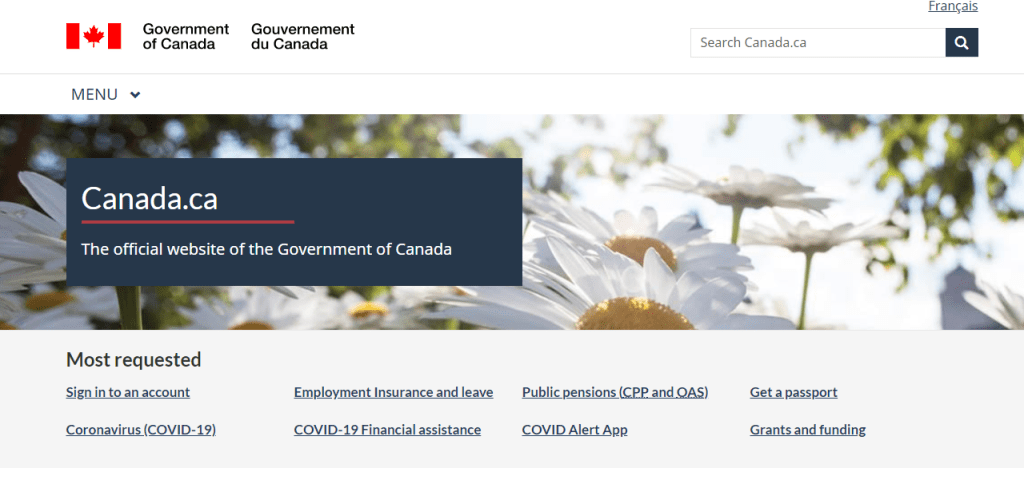
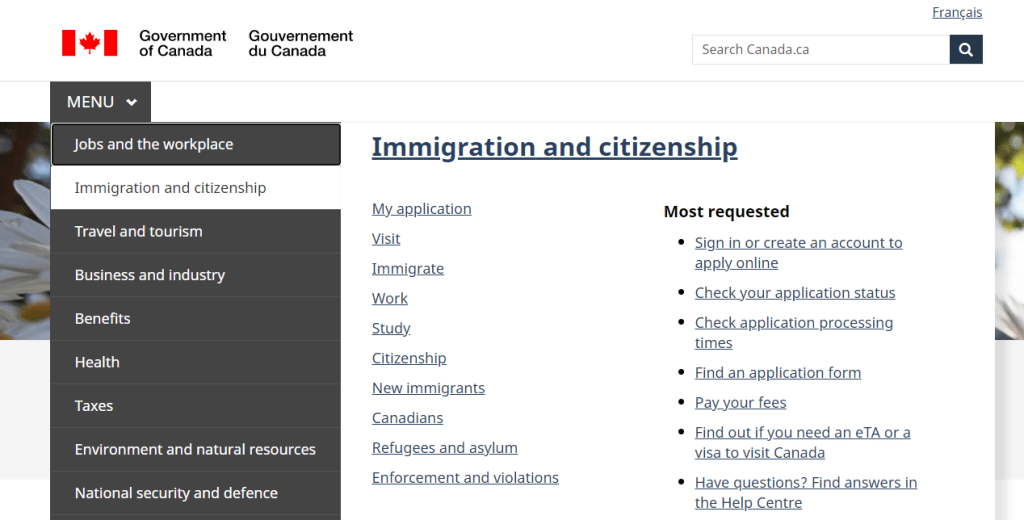
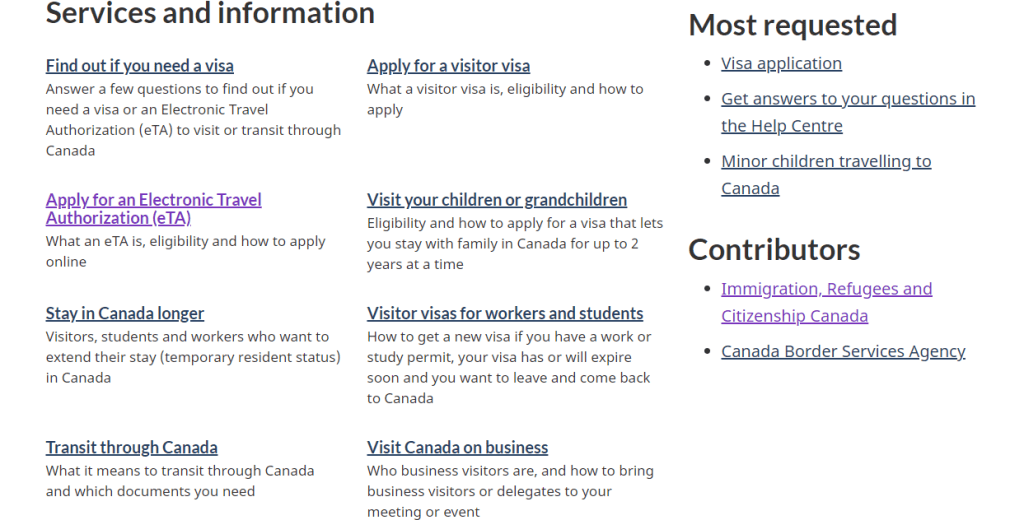
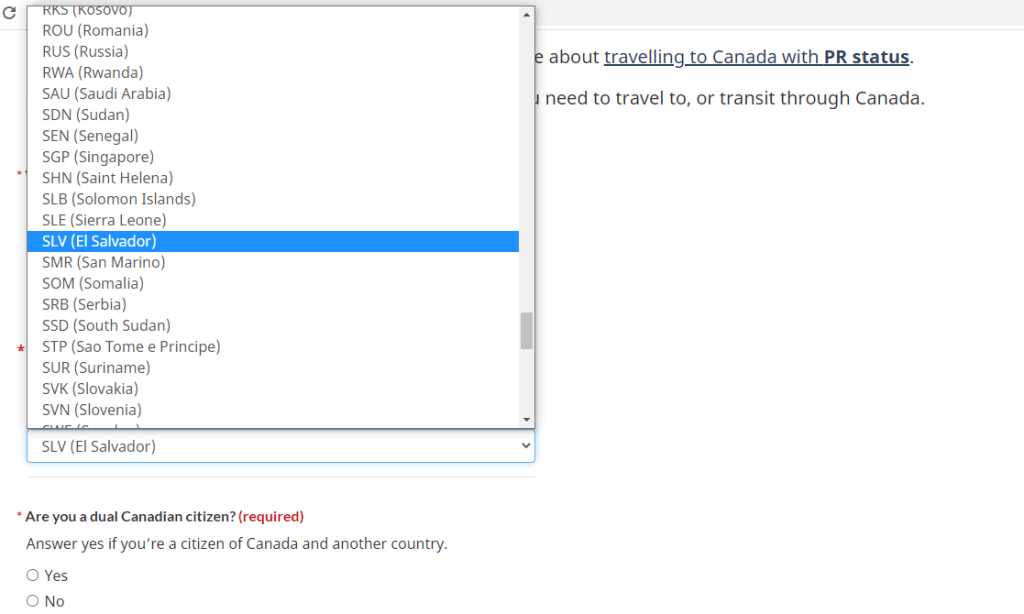
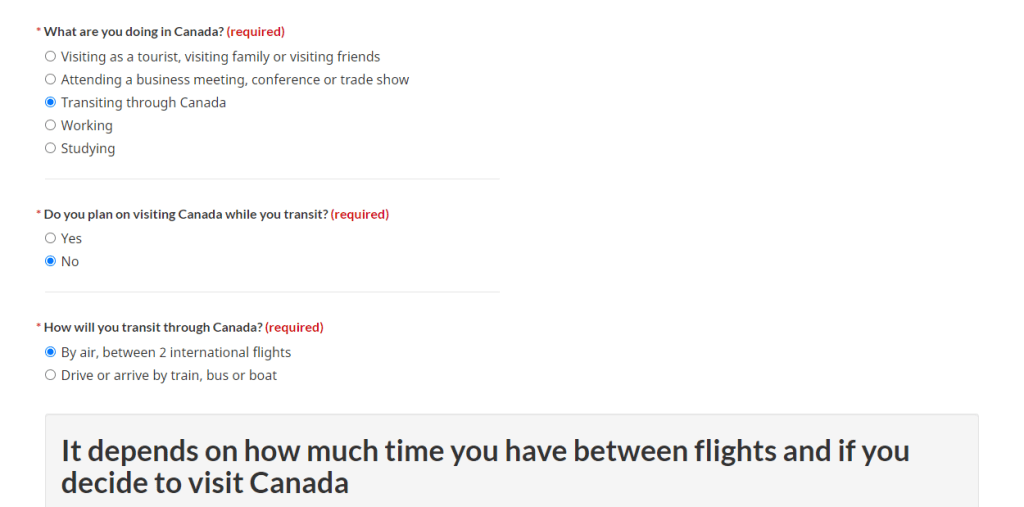
Your first step is therefore to go on the Canadian government’s official website, available in English and French. Go to the menu and click on the “Immigration and citizenship” section. You will find several options, but the one that interests us is « visit« . To find out if your nationality requires a visa procedure, click on the « Check if you need a visa » section. Fill out the questions with your travel document type, the country that made your passport and the reason of your travel. A detailed and personalized response will appear. This is valid for all nationalities.
https://www.cic.gc.ca/francais/visiter/visas.asp
Step n°2: Apply
Santi: In my case, I had the possibility to apply for transit visa, valid for any foreigner stopping over in the country for less than 48 hours. It belongs to the Temporary Resident Visa category (the standard visitor visa) but with a different wording.
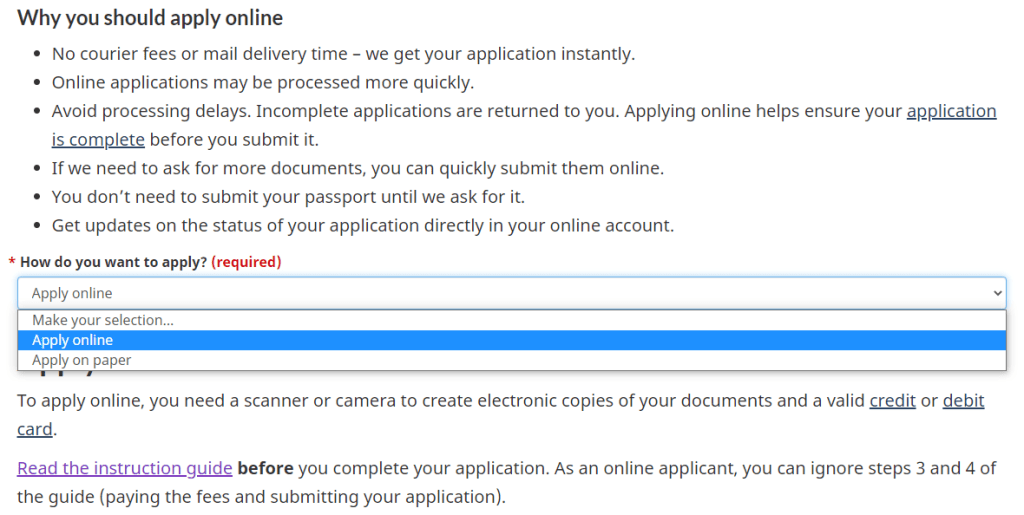
Unlike most procedures which require a long time to properly prepare your application (documents to be printed, etc.), the website allows you to make it directly online with a dematerialized application. Thus, you avoid trips to embassies, delivery times… In the case of a missing document, the platform will notify you and will continue to process your application afterwards. The website also indicates that online visa applications are processed faster than the ones made on paper.
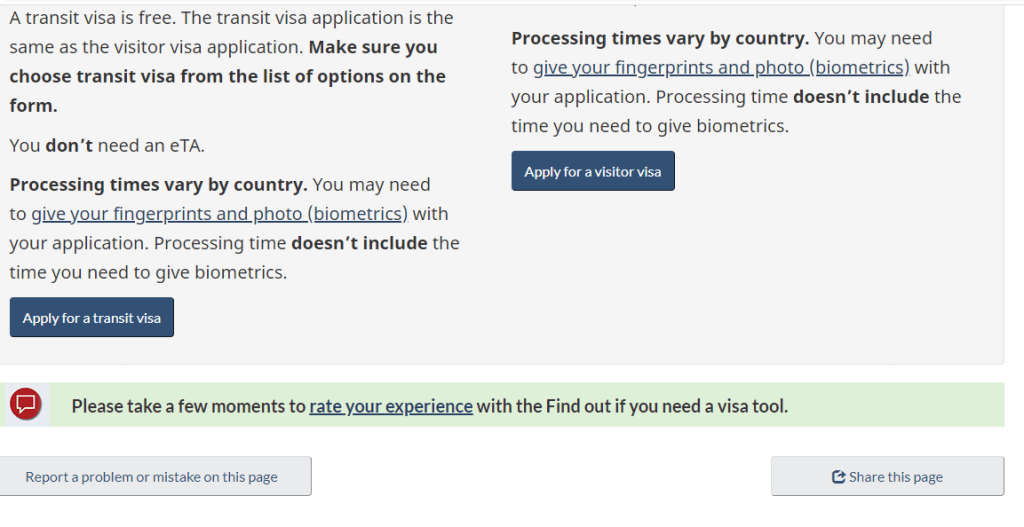
Lea: For French nationals, no visa is required to transit during a stopover, but only an ETA (Electronic Travel Authorization), for which you can apply online (link available once you have taken the test to find out which category of traveler you belong to) and costs $7 CAD.
Apply ONLINE
Santi: I chose to apply online because that is much more accommodating and requires a computer, a scanner or camera and a bank/credit card.
Don’t worry about getting lost or making mistakes, the website has a written instruction’s guide and a series of very detailed videos (I mean, very, very, very detailed). Do not hesitate to check them at least once.
Then, you will need to create an IRCC account, the Department of Immigration, Refugees and Citizenship Canada. For those who have no administrative relations with Canada, you must sign in with a GCKey which will allow you to create an account and a password (everything is explained in the instructions).
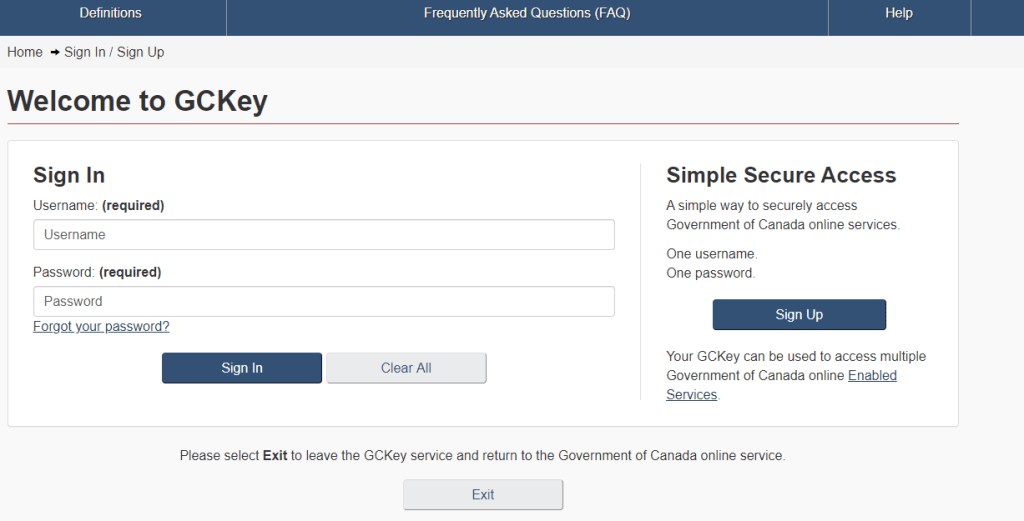
Done? You are ready for the next step!
Step n°3: Gather documents
Santi: You have to keep something in mind: the transit visa procedure requires fewer documents than a regular visitor visa, since you will only be staying inside the airport without actually entering the country.
To send your application, you will need a form for “Temporary Resident Visa Application outside Canada », directly available on the website. This form has two particular features: the first one is that it cannot be opened in PDF format, as we are used to. Instead, you need Adobe Acrobat Reader, available for free online. This is directly linked to the second feature: the form must be completed in digital format with the information entered in the blank spaces and in a specific format (see the instructions guide if necessary). You can save your progression and resume it later if you don’t have time to complete it all at once. Once you have done all of it, you will be able to digitally sign your form and upload it on the application website. Normally, you will be notified of any errors or omissions in data/information entry before the software applies the signature.
You have to add 4 supporting documents to the form and they must be provided within 30 days, any incomplete application being deleted:
– a scan of your passport (the information page and granted visa stamps)
– An identity photo
– a travel itinerary (however, avoid paying anything in transport, provide just an itinerary simulation)
– Annex 1 of the visa form
You also have a section for optional documents, so you can provide any element that may be favorable to your application. The transit visa is free, so no worries to have. Once everything is ready, send your application file directly through the platform. An acknowledgment of receipt should come very soon.
Lea: For French citizens, you need to prepare your passport in order to enter the information required to apply to the ETA. The other questions on the form concern your situation (address, contact details) and eventually your previous trips to Canada. The form can be completed very quickly before proceeding to the online payment. Once all of this was done, I received an email after two minutes telling me that I was authorized to transit through Canada. All you have to do then is to book your plane tickets and enjoy your trip!
Step n ° 4: Biometrics
This is the only part of the procedure that is not dematerialized and, depending on your situation, it may require to move to do it.
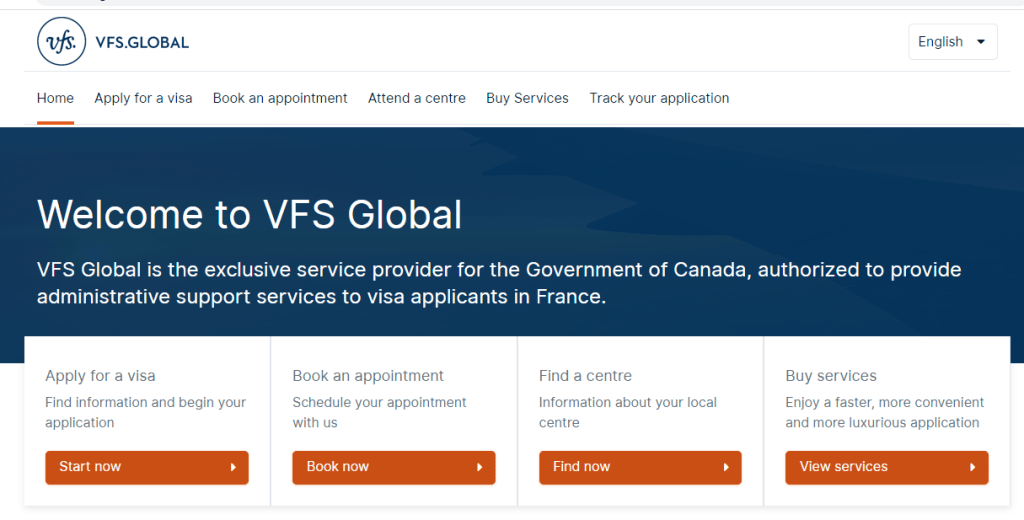
If this is your first time applying for a Canadian visa and if you do not have a biometric passport, you will receive a letter via the IRCC platform with a convocation to submit your biometrics (that is to say an ID photo and your fingerprints) to a VSF Global visa application center, not to be confused with the Canadian Embassy itself. VFS Global is a company responsible for managing various administrative procedures for the governments of different countries, such as passport or visa applications.
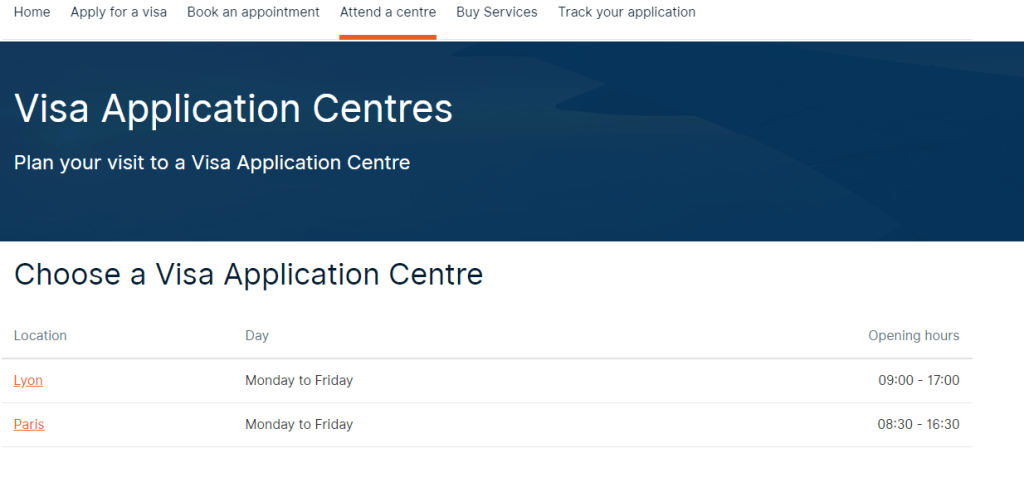
Be careful and do not go to centers dedicated to other countries: in France, VFS Global has two application centers for Canadian visas, one in Lyon and the other in Paris. Choose wisely because if you need to transfer your application from one place to the other, you will have to pay fees. The application center in Paris is located in Clichy, and this is the one I went to in order to continue my application.
You need to create an account on the VSF Global website and make an appointment for biometric enrollment (the time frames are quite wide). Arrive 15 minutes before your appointment with the convocation printed on paper and your passport.
Santi: In my case, the photos and the fingerprints were taken in less than 20 minutes. A sticker with a bar code will be stuck on your passport and another one will be given to you, keep it safe. The biometrics are valid for 10 years, so this step will no longer be necessary if you choose to return to Canada during this period.
Step n°5: Wait for the passport’s request
Deadlines may vary due to various factors. Once your biometrics have been received and verified by the Embassy, a new letter will be sent to you via IRCC asking you to send your passport, along with the letter sent to you for this purpose and the biometrics sticker. No need to move, you can purchase the VSF Global’s courier service, for which you will need to print and sign a consent form and have a certified bank cheque issued to “VF Services (UK) Limited”, costing 18.15 euros (amount can be checked on the website in case of variation). You must put everything in an envelope and send it by registered mail to the application center.
Step n°6: Just wait
Santi: Now, and unless there is a mistake or if they need further information, the ball is in their court. Processing times vary greatly from country to country. For me, the affirmative answer arrived via the IRCC platform after a few days, and the Chronopost containing my passport and an explanatory letter arrived about ten days later.
You are now ready to go peacefully! Good luck with your procedure and have a good trip!

 2 Steps Abroad